Category: Features

  • Inside Indie Vibe House Party’s At Home Together 2026: Three Days of Music, Art and Connection

    Inside Indie Vibe House Party’s At Home Together 2026: Three Days of Music, Art and Connection

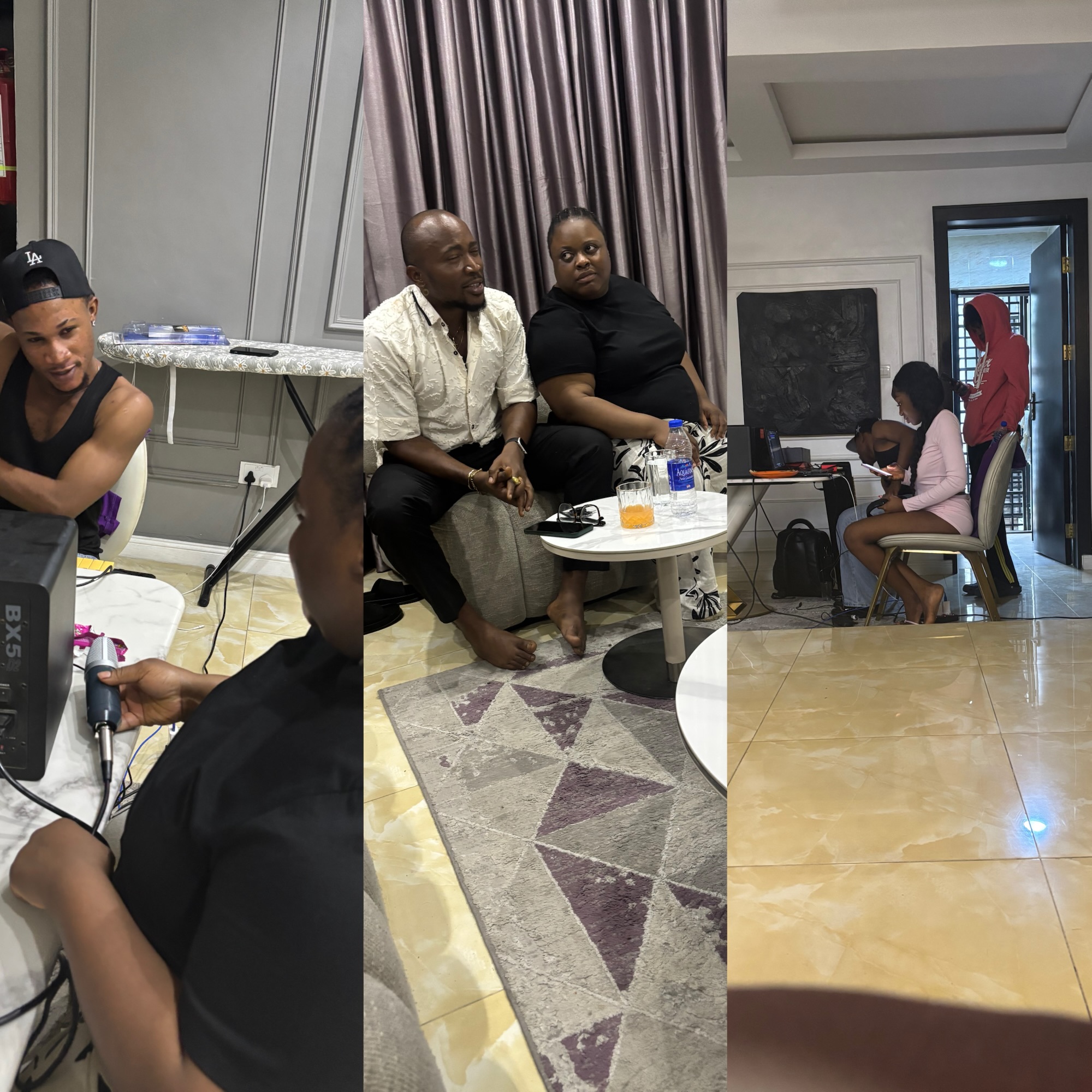
    Music, creativity, and community took centre stage at the 2026 edition of Indie Vibe House Party’s At Home Together Creators’ Retreat, where artists and industry voices spent three days collaborating, connecting, and creating new music.

    The retreat featured recording sessions, themed activities like Paint & Sip and movie night, and conversations with voices across music, film, and pop culture, including music journalist Joey Akan and Nollywood actor and director Paul Utomi, who shared insights from their respective fields.

    Beyond the activities and conversations, participants worked on new records during the camp. The music is currently being developed into a project slated for release, with more details to come.

    For Nathalie Wemambu, the founder of Indie Vibe House Party, the retreat was inspired by a desire to give independent creatives a space to make music, build meaningful relationships, and recharge away from the pressures of the industry.

    “I wanted to build a nurturing, cozy ‘second home’ where creators can decompress, showcase and create their live music, find organic mentorship, and form deep, collaborative bonds,” she shared.

    That vision also informs the retreat’s substance-free environment, which prioritises wellness and encourages artists to create from a place of clarity and genuine connection.

    Beyond the retreat, Indie Vibe House Party continues to support independent creatives through live music experiences, recording camps, creative retreats, and collaborative projects. The collective also welcomes partnerships and collaborations with individuals, brands, and organisations looking to create meaningful experiences across music, film, events, and the wider creative industry.

    For bookings, partnerships, and collaborations, interested parties can reach out to Indie Vibe House Party via email or social media.

    With the 2026 retreat behind them and its musical project in development, Indie Vibe House Party is building on the connections and creativity fostered during the experience. At Home Together was only the beginning.

    About Indie Vibe House Party

    Indie Vibe House Party (IVHP) is a live music collective and cultural platform dedicated to supporting independent artists through intimate live experiences, recording camps, creative retreats, and collaborative music projects across Africa and the diaspora.

    Since its launch, IVHP has evolved from a music showcase platform into a creative ecosystem, producing artist development initiatives, community events, and original music projects, including Tales We Tell At Home, a collaborative album created through the collective’s recording camp programme.

    IVHP has also partnered with and supported initiatives including GreenCamp, EikoSystem, WeAreProducers, and other community-focused creative organisations.

  • How Lagos Shapes Suki Salaam’s Music and Creative Vision

    How Lagos Shapes Suki Salaam’s Music and Creative Vision

     Lagos has inspired countless artists, but for Suki Salaam, the city extends beyond the music itself. It influences the visuals, fashion and creative identity that surround his work.

    Suki Salaam in Lagos

    Also known as POPGOD, the Lagos-based artist blends Afrobeats, R&B, soul, jazz and dancehall into a sound that reflects his diverse musical influences. That approach carries into his visual storytelling, with music videos that feature the city’s streets, architecture and scenery as part of a broader artistic direction.

    For Suki, the connection between music and Lagos is intentional.

    “I believe that music is more than just sound; it’s a lifestyle. By combining the vibrant fashion scene and the tropical essence of Lagos with my music, I aim to create an experience that resonates on multiple levels and showcases the soul of our city to the world.”

    Rather than treating fashion and visuals as separate elements, Suki sees them as extensions of his music, using them to express the character of the city that continues to shape his creativity.

    As artists increasingly build identities that stretch beyond their music, Suki’s work reflects a growing emphasis on connecting sound, style and storytelling into a single creative vision.

    Suki Salaam is set to release a new album this year

    Suki is expected to release a new album later this year, alongside a series of live performances. The forthcoming project will continue to explore the blend of genres and visual storytelling that has become central to his artistry.

    The album has not yet received a release date. It will be available later this year.

  • From Nigeria to Turkey: How Vuga Kvngz is creating his own lane in Afrobeats

    From Nigeria to Turkey: How Vuga Kvngz is creating his own lane in Afrobeats

    Vuga Kvngz, born Chiedozie Eze Walter, is a Nigerian recording artiste from Imo State, currently based in Istanbul, Turkey.


    Known for his genre-blending sound called Vuga Vibes, KVNGZ fuses Afrobeats, Hip-Hop, Alternative, and Reggae influences to create music rooted in real-life experiences, culture, and ambition.

    His debut album, V.V.S (Vuga Vibes Sound), is a 10-track body of work that showcases his artistic growth, versatility, and global perspective, featuring collaborations with Hotyce, Oduduwa, Zilla Oaks, and BodyBeatz.


    Beyond music, KVNGZ is a co-founder of World Boyz Entertainment, a creative platform supporting music, fashion, and cultural events in Istanbul.
    V.V.S (Vuga Vibes Sound) is available on all major streaming platforms.

  • Is Llona The New Face of Emo-Afrobeats?

    Is Llona The New Face of Emo-Afrobeats?

    By Ibeh Fortune Chidinma

    In a genre dominated by celebration, Llona positions himself not as a party-starter, but as a preacher of introspection. He draws on pain and trauma from his experiences within his nomadic community, offering a form of musical self-therapy.

    While his message is potent, its consistent solemnity may limit his commercial reach—a trade-off that arguably strengthens his artistic authenticity. His music delivers a piercing resonance, a reflection so potent it makes the hairs on your skin stand on end.

    His recent release, “Dead Flowers,” solidifies his place among Afrobeats‘ growing emotional voices. The track is a vital contribution to an expanding “afro-emotion” subgenre. Llona frames himself as a change agent, singing, “I believe / yes, I believed / I will build a future that’s just not for me / take away the chaos, advocate for peace.” He emphasizes an internal competition, needing no external validation: “I don’t care who is next / not the reason that I’m here.”

    This is more than an expression of past pain; it’s a declaration of arrival. He signals a readiness to reveal the “hidden Super Star” he has realized he is.

    This artistic identity was forged in his debut album, “Homeless,” which marked him as a distinctly introspective voice. The project expressed vulnerability, struggle, and resilience, often using dark humor to navigate despair. In “Still Scared,” he sings, “stuck in the place where they can’t save us… running and running like a stray dog / death is the only thing that saves us.”

    Llona is actively building the foundation to become the face of “Emo-Afrobeats.” A key strategy is his ambitious “Homeless” nationwide tour, a rarity in the Nigerian music scene due to significant economic and logistical challenges. While major artists often focus solely on commercial hubs, Llona leveraged this tour to connect with the grassroots, performing in cities like Ogbomosho, Benin, Lokoja, Awka, Owerri, Lafia and Abeokuta. This grassroots focus builds a dedicated fandom and gives audiences what they yearn for “to see artists perform live”.

    His music might not be “party flow,” but it speaks to the everyday Nigerian’s reality. The “Homeless” tour has skyrocketed his listenership, proving that his message of vulnerability and self-found therapy is not just artistically sound, but a viable path to building a legacy. Llona is a phenom to watch, potentially steering clear of his peers by forging one of the most strong, connected fandoms in the industry.

    About the Author

    Ibeh Fortune Chidinma is a media creative, podcaster, and culture writer passionate about music and entertainment space. He explores Afrobeats and African pop culture with a focus on the artists shaping today’s sound. When not writing, he is hosting the Spillers Podcast, where bold conversations meet social commentary. Follow him on X @Datafricanboy .

  • Is Duncan Mighty’s  2018/19 Era the  Biggest Comeback in Afrobeats History? 

    Is Duncan Mighty’s  2018/19 Era the  Biggest Comeback in Afrobeats History? 

    By Ibeh Fortune Chidinma

    The resurgence of the “Port-Harcourt first son,” Duncan Mighty, into the mainstream in 2018 was nothing short of spectacular, you really had to be there to witness it.

    After years away from the mainstream, 2018 marked a powerful reignition of Duncan Mighty’s career, a comeback that few saw coming. What some considered just a return turned into a dominant force in Nigerian music: Duncan Mighty was everywhere, collaborating with every A-list artist of the time.

    His dominance began with the hit song “Fake Love” featuring Wizkid, which instantly went viral. The catchy lyrics, “Only fakers be loving when you have… When e red, them tuwama when e red,” quickly became a staple on radio and in clubs across the country.

    Duncan Mighty and Wizkid in the “Fake Love” video

    What initially seemed like a one-off collaboration blossomed into a wave of features.

    Every top artist wanted a piece of Duncan Mighty’s magical sound. Notable collaborations include “Lova Lova” with Tiwa Savage, “Aza” with Davido and Peruzzi, “Bio Bio” with Reekado Banks, “Gimme love” with DJ Xclusive, and “what I see” with Phyno.

    Through this period, Duncan Mighty reminded the industry of his legendary talent and cemented his place as a living legend of Afrobeats. 

    This, without doubt, stands as one of the greatest comebacks in Afrobeats history.

    About the Writer

    Ibeh Fortune Chidinma is a media creative, podcaster, and culture writer passionate about music and entertainment space. He explores Afrobeats and African pop culture with a focus on the artists shaping today’s sound. When not writing, he is hosting the Spillers Podcast, where bold conversations meet social commentary. Follow him on X @Datafricanboy .